Sunday, January 18, 2026
Participants: 4
18th Meeting of the De-Gender Role Association
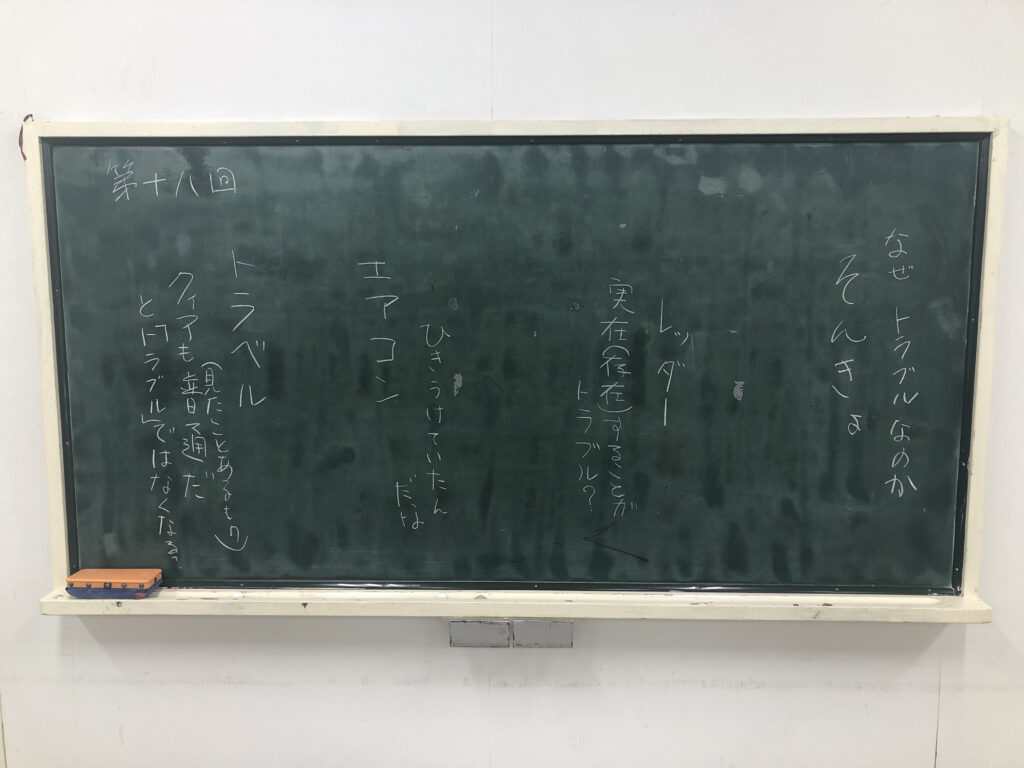
”Why the Trouble?”
第十八回目の脱ジェンダーロール会では、哲学的なジュディスバトラーの『ジェンダートラブル』の読解のため、藤高和輝著の『<トラブル>としてのフェミニズム「取り乱させない抑圧」に抗して』の第一部を読み話し合いました。
What Triggers "Trouble"?
Giving voice to one's sense of discomfort often invites "trouble." In this session, while affirming the positive aspects of speaking up, we exchanged views on why such acts frequently escalate into conflict.
Trouble as a Catalyst for Social Change
The book highlights the "Hoiku-en ochita" (I failed to get my child into daycare) viral blog post in Japan as an example of how "trouble" can spark social reform. A single, desperate cry resonated and evolved into a major movement. Participants shared various similar examples during the discussion.
Armament and Decision-making in Daily Life
参加者からは、身近な葛藤としてマニキュアの話題が上がりました。「会社にマニキュアを塗っていきたいが、周囲から違和感を指摘された際の説明コストを考えると、結局塗らずに出社してしまう」という声がありました。
これに対し、「誰しも、何の身支度や準備もせずに外へ出ればトラブルになり得る。私たちは何かしらの武装をして社会と対峙しており、トラブルを起こすか否かの判断は、家を出る前の身支度の段階で日常的に行っているのではないか」という意見もありました。
Rejection of the "Unidentifiable"
A conflict regarding how men hold umbrellas was shared. A man was told he looked "like a woman" because he rested the handle on his shoulder, similar to a Monet painting. This sparked a discussion that people show a rejection response—leading to trouble—when they encounter unfamiliar gestures or "unidentifiable" things that do not fit into existing frameworks.
The Boundaries of Trouble and Embodiment
Conversely, it was noted that updating social values can resolve such trouble. If it becomes "normal" for boys to have long hair or wear nail polish, the sense of discomfort disappears, and it ceases to be "trouble." What constitutes trouble depends largely on individual bias and social convention.
最後に、 バトラーが提唱する「トラブルとは、男や女という規範を模倣しようとして生じる『失敗の身体化』である」という説について話しました。参加者からは、
- 「失敗」という言葉よりも、もっと肯定的な「素直な身体化」と言い換えられるのではないか」
- "We want to use more positive expressions to affirm our own way of being."
The Problems Inherent in "Universality"
During the dialogue, the question "What is universality?" surfaced, revealing that we may unconsciously use the word in two different senses.
Two Definitions of Universality:
First, organizing the definitions of the term, they can be divided into the following two types:
- Static Universality: Something immutable and fluidless that transcends time.
- Dynamic Universality: A fluid social consensus that applies broadly to people living in the present.
議論において、互いがどちらの「普遍」を指して話しているのかが食い違うと、対話が噛み合わなくなるという気づきがありました。
Individuals Excluded in the Name of Universality
Regarding statements like "Women love this, so they will be pleased," participants questioned if this is merely the opinion of "someone representing women." Presuming something is "universal" risks rendering individuals who fall outside that framework invisible or excluded.
The Danger of "Lumping Together"
Similar issues were noted in narratives regarding life stages like childcare:
- Generalizing Attributes: Lumping experiences together as "this is what childcare is like."
- The Subject "We": This word, born from collective consciousness, can limit or define others, potentially alienating those who do not fit the mold. We concluded that we must remain conscious of the "size of the subject" to ensure individualities are not lost in the shadows of "universality" or "we."
"When we use words like 'universality' or 'we,' is someone’s individuality being compromised in the shadows? The necessity of remaining constantly aware of the 'scale of the subject' was emphasized."
What Does it Mean to "Take On" an Identity?
Regarding fitting oneself into categories like Japanese, Woman, Man, or LGBT, one opinion was: "What I do is my identity; I feel uncomfortable being easily defined by a category."
On the other hand, some shared that being socially recognized through such categories provided a "foothold," leading to experiences of empathy and validation. Positioning oneself as a social entity through a category allowed for a sense of connection with society.
However, a desire was also expressed to exist as a "being that simply is"—neither man nor woman—prior to choosing any category, free from required roles or "should-be" frameworks.
This raised a further question: as long as one internalizes the "should-be" consciousness, are they not "taking on" and living that category?
While accepting a category may bring discomfort, it also creates points of contact with society. We shared the feeling of oscillating between these two realities.
Notes: Danshiro
References:
Feminism as "Trouble": Against the Oppression of "Not Letting One Get Upset"
By Kazuki Fujitaka
Part I: The Philosophy of
Chapter 1: Is There a Future for Trouble?
Chapter 2: That Which is Not Yet Realized
Chapter 3: Existence and Trouble
Past posts
- "Parite and the Global Situation"
- Reflections on Parity
- Japanese social structure and gender
- Women's lib from the ground up
- Living our contradictions
- Future References
- A map of gender theorists
- Why the Trouble?
- Matrilineal Society, Instinct, and Gender
- Perspectives on Marriage in Japan
- Future References
- Gender Roles Considered from Article 24 of the Constitution
- Colonial Rule and Gender
- Military History and Gender
- Expanding the Range of Masculinity
- Body Image Through the Lens of Body History
- How History Shaped Our Ideas of Gender
- Gender Representation from the Perspective of Women’s History
- Exploring the Family of the Future through Family History
- Body, Feminism, and Porn
- Nation and Gender
- Choices in Labor, Sex Education, and Gender
- On Postmodern Families and Gender
- On Diversifying Families and Children's Rights
- Gender Roles in Parenting